
 Bookmakers set odds based on probabilities, but they are not always perfect. Sometimes they overestimate a popular team or underestimate an underdog. That gap between the real chance of something happening and the odds offered is where value lives.
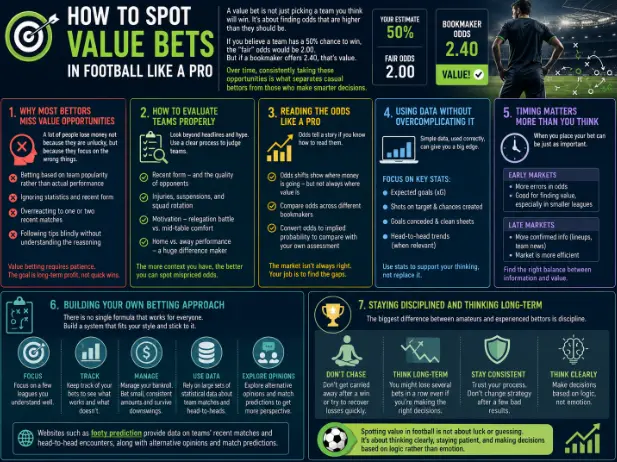
For example, if you believe a team has a 50% chance to win, the “fair” odds would be 2.00. But if a bookmaker offers 2.40, that’s value. Over time, consistently taking these opportunities is what separates casual bettors from those who make smarter decisions.
Bookmakers set odds based on probabilities, but they are not always perfect. Sometimes they overestimate a popular team or underestimate an underdog. That gap between the real chance of something happening and the odds offered is where value lives.
For example, if you believe a team has a 50% chance to win, the “fair” odds would be 2.00. But if a bookmaker offers 2.40, that’s value. Over time, consistently taking these opportunities is what separates casual bettors from those who make smarter decisions.
Why Most Bettors Miss Value Opportunities
A lot of people lose money not because they are unlucky, but because they focus on the wrong things. They chase big wins, follow emotions, or rely too much on favorite teams. Here are a few common mistakes:- Betting based on team popularity rather than actual performance
- Ignoring statistics and recent form
- Overreacting to one or two recent matches
- Following tips blindly without understanding the reasoning
How to Evaluate Teams Properly
To spot value, you need a clear way to judge teams beyond headlines and hype. Start with basic factors and build from there. Look at recent form, but don’t stop there. Check who they played against. A team winning against weak opponents is different from one performing well against strong competition. Also pay attention to injuries, suspensions, and squad rotation. Missing one key player can change the balance of a match. Motivation matters too. A team fighting relegation may play very differently compared to one sitting comfortably mid-table. Home and away performance is another big factor. Some teams are strong at home but struggle on the road. This often creates opportunities where odds don’t fully reflect reality.Reading the Odds Like a Pro
Odds tell a story if you know how to read them. They reflect not only probability but also public opinion and bookmaker strategy. If odds shift significantly, it usually means money is coming in on one side. But that doesn’t always mean it’s the right side. Sometimes the public pushes odds in the wrong direction, creating value on the opposite outcome. It helps to compare odds across different bookmakers. If one bookmaker offers noticeably higher odds for the same event, it could signal a potential value bet. Another useful habit is converting odds into implied probability. This makes it easier to compare your own assessment with what the bookmaker suggests.Using Data Without Overcomplicating It
You don’t need advanced models or complicated spreadsheets to find value. Simple data, used correctly, can go a long way. Focus on a few key stats:- Expected goals (xG) to understand performance beyond results
- Shots on target and chances created
- Defensive stability (goals conceded, clean sheets)
- Head-to-head trends, but only when relevant